







Prem App

designing branding for web, print & mobile

MOBILE APP | WEBSITE | BRANDING| PRINT | Service Design

Educational

Strength

Warmth

Matritva App (Motherhood)

Maternal Healthcare Ecosystem: Designing Services for Pregnant Women in Rural India

During my UX Design internship at UMass Chan Medical School, I designed a digital health ecosystem for first-time parents in rural India—bridging the gap between clinical expertise and community accessibility.


The platform integrates predictive malnutrition analytics with localized health education, backed by a social commerce model that makes essential childcare products affordable for underserved communities.

My first ever UX Internship!

PRODUCT

Digital Health Ecosystem Mobile App for First-Time Parents in Rural India — UMass Medical

TIMELINE

Aug – Dec 2023 → Concept Design & Dev Hand-off

MY ROLE

UX Design Intern

As a UX Design Intern, I drove end-to-end design strategy and execution across the digital ecosystem—bridging clinical health requirements with intuitive, accessible user flows.

Ran discovery and market research to translate complex clinical requirements into accessible, low-literacy user flows.

Executed problem solving, MVP scoping, wireframing, and interactive prototyping.

Developed and maintained design systems to ensure UI scalability across surfaces.

Led product presentations and key stakeholder reviews to align leadership on the core solution.

TEAM

Apurv Soni – Mentor

Andres Colubri – UX Lead

Ibriz Moonim – Product Manager

TOOLKIT

Figma, Adobe XD, Balsamiq Wireframes, UserBerry

PROBLEM WITH PREGNANCY CARE

The Human Cost of Inadequate Care

Behind every statistic is a mother, a child, and a family whose lives could be transformed through better healthcare access. By replacing systemic friction with compassionate, community-first service design, we turn passive data points into active pathways for survival, preventive care, and lasting health equity.

35,000+

women

in 2017

Women lost to pregnancy & childbirth-related complications in India


📅 That's 96 women every day


See Meena’s Story>

12%

of global

mortality

Of global maternal mortality occurs in India - being 17.7% of world population


📍 Concentrated in rural regions


View Regional Impact >

60%

preventable

deaths

Deaths could be prevented with proper monitoring and early intervention


🧒 That's 250,000 children annually

See how technology helps? >

MISSION

Project Goal

To create an Android Mobile Application that

uses predictive analysis and data science

for tracking pregnant women and child health, in rural India to support community healthcare workers in fighting against infant malnutrition

Target Users: Healthcare Workers

Focus: Maternal & Child Health

Technology: Predictive Analytics

The Problem

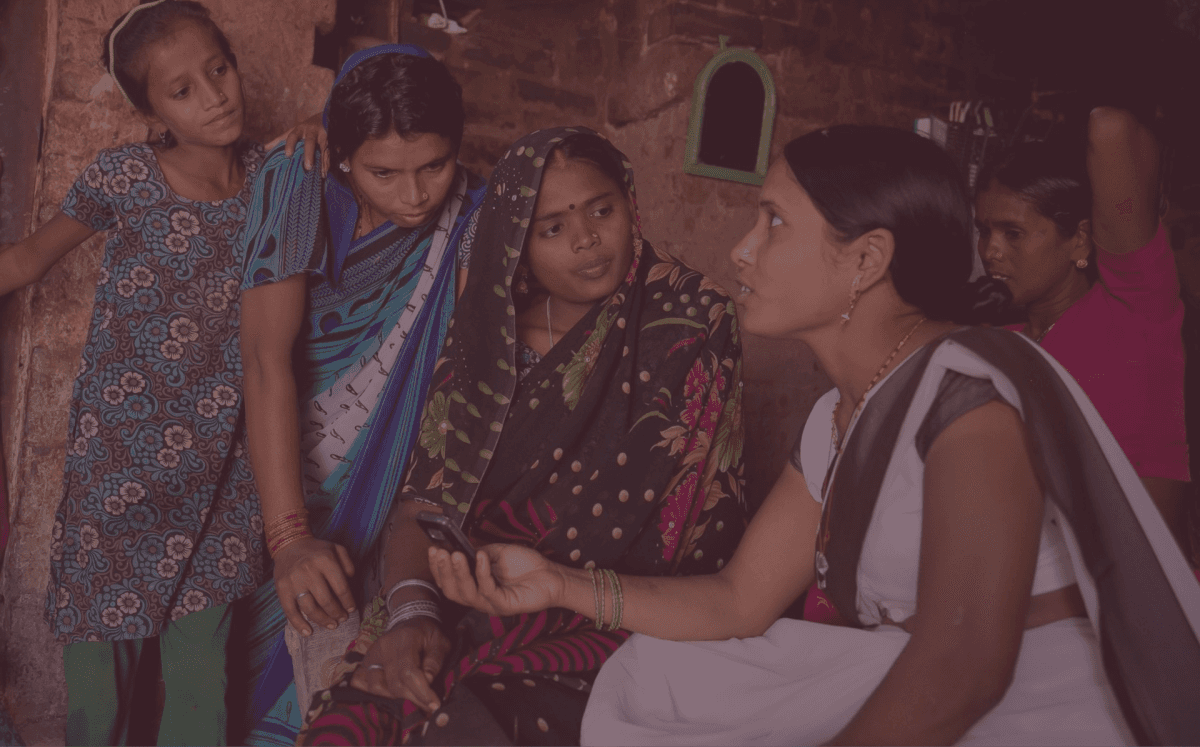
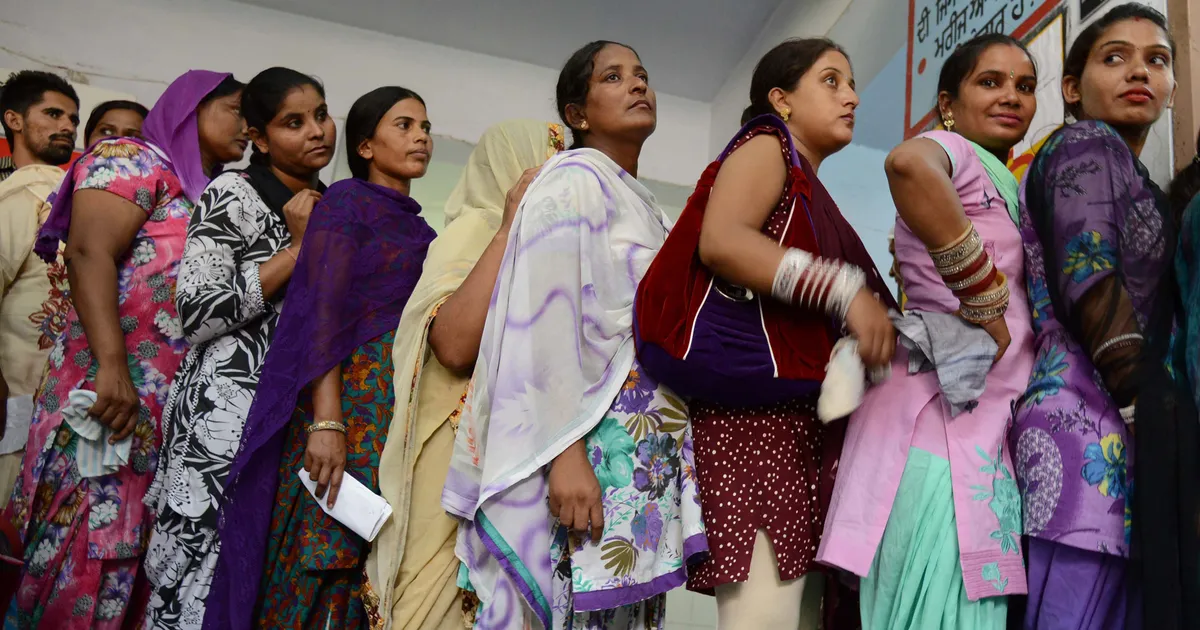
In rural India, limited access to healthcare information and resources leads to preventable maternal and infant deaths. Community healthcare workers lack the tools to effectively monitor high-risk pregnancies and infant nutrition.

The lack of education and resources during pregnancy contributes to this issue.

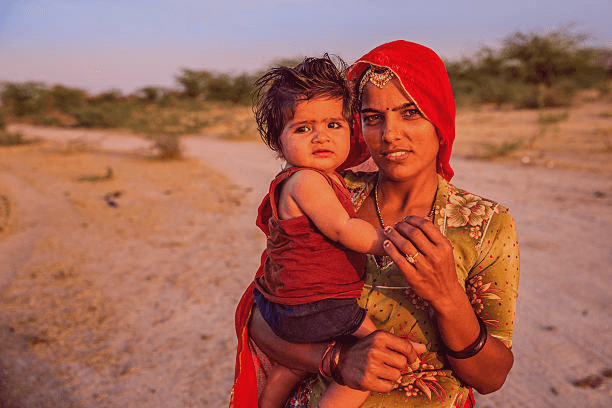
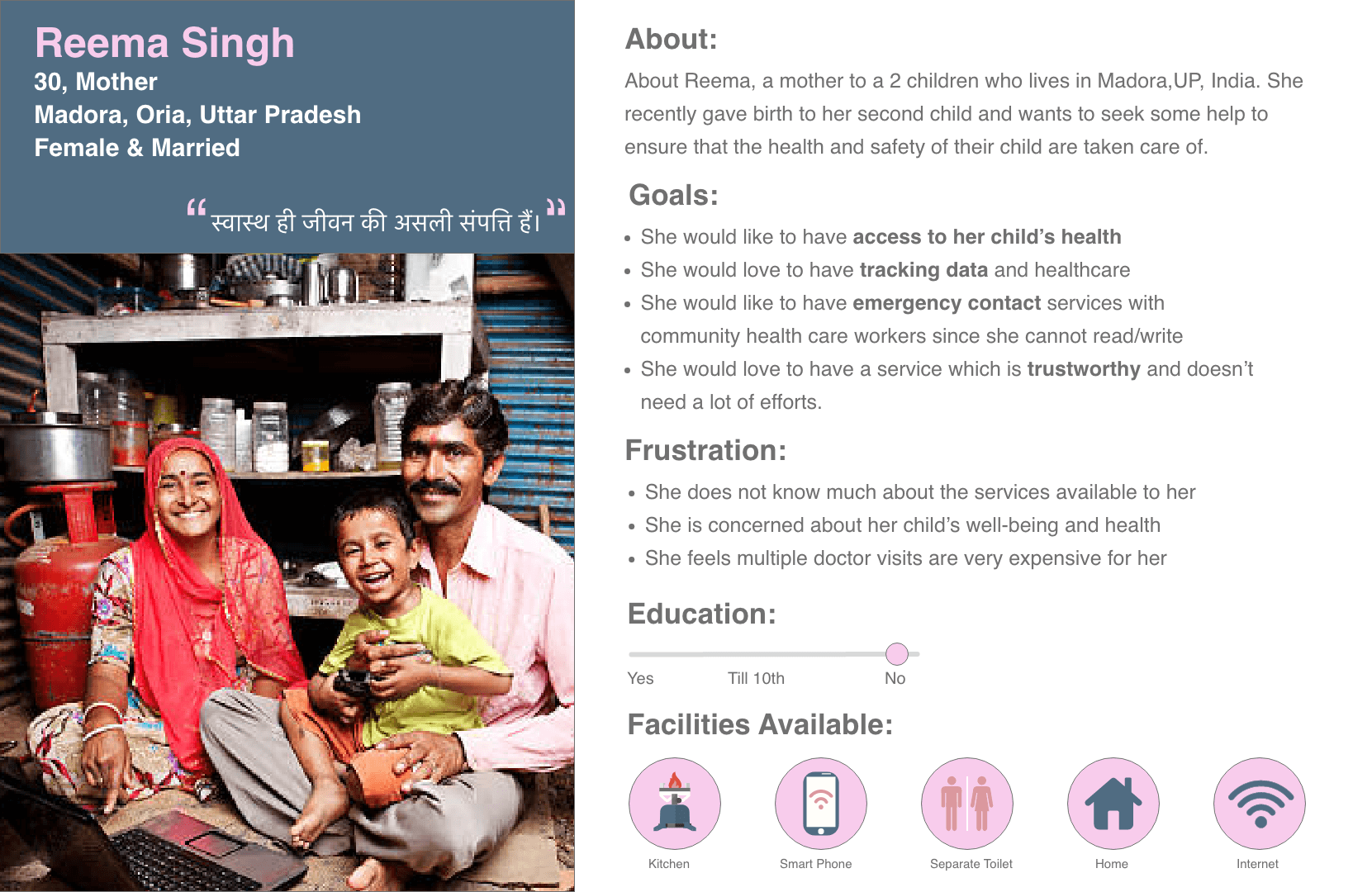
Meet Reema & her daughter

A young mother from rural India who lacks access to proper prenatal care and nutritional guidance

Real time monitoring & tracking

1

Track vital health metrics and medication schedules with automated reminders and personalized insights.

Healthcare Worker Access

2

Connect seamlessly with community healthcare workers for virtual consultations and emergency support.

Predictive Analysis

3

Use predictive analysis and machine learning to identify potential issues.

How might we help..

Pregnant mothers are looking find a way to track their baby’s health, receive updates, and get trusted advice—without frequent doctor visits

Or keep scrolling to know the design process

Key Highlights of The App

A simple dashboard that suggests what to learn today, based on your goals. Designed for people with limited time.

An interactive timeline that tracks your progress and visualizes your achievements over weeks.

A personalized quiz section that adapts questions based on your past mistakes to reinforce learning.

A resource library with curated articles, videos, and tutorials tailored to your current skill level.

BACKGROUND RESEARCH

How is pregnancy currently tracked in India?

Pregnancy in rural India is inconsistently tracked due to limited healthcare access, poor infrastructure, and geographical barriers. Meanwhile, child malnutrition and preventable deaths remain a serious concern, driven by lack of awareness, posing a significant challenge to India's population health.


India has two main cadres of Government Community Healthcare Workers:

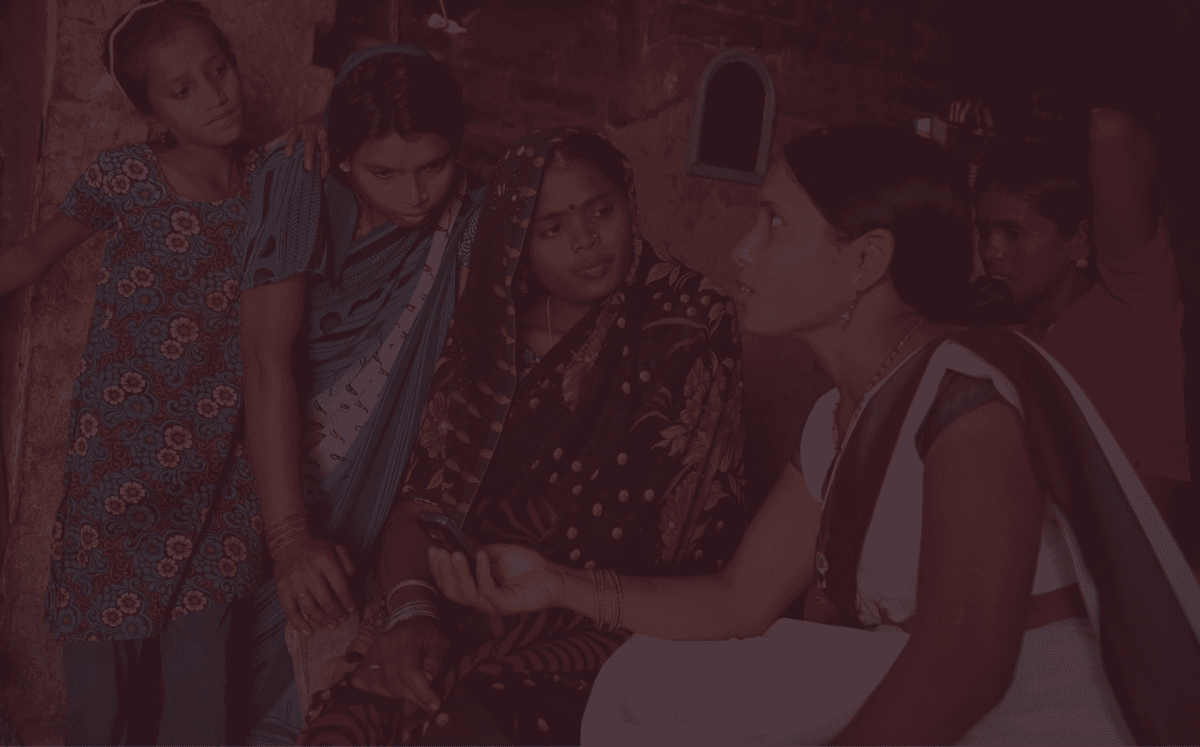
ASHAs: Act as a bridge between their community and the public health system. They provide essential health education, focusing on reproductive health, diabetes prevention, and healthy lifestyle choices.

Anganwadis: Anganwadis are government centers in India that provide nutrition, healthcare, and early education to children under six, pregnant women, and nursing mothers, aiming to improve child development and maternal health.

LOOP HOLES IN CURRENT WORKFLOW

Problems Faced by the Anganwadi's & ASHA's:

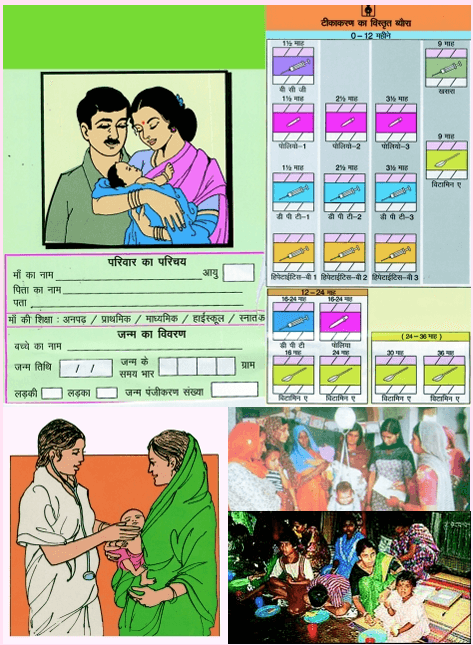
Through primary and secondary research, we identified the key challenges faced by ASHA and Anganwadi workers. This insight was gathered from newspaper reports and direct interviews, helping us understand their pain points and daily struggles.

Study Reference JFMR

Manual Record-Keeping:


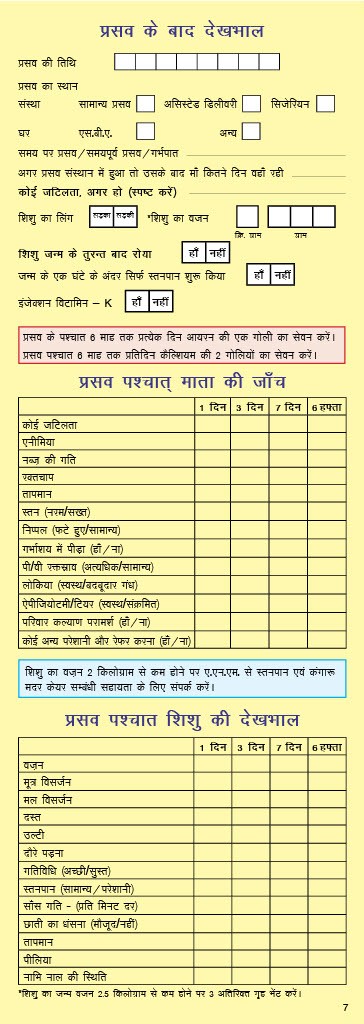
Without digital tools, workers rely on paper records, leading to errors and inefficiencies in prenatal care, immunizations, and nutrition tracking.

THINK INDIA QUARTERLY

Increased Workload:


Repetitive data entry burdens Anganwadi workers, limiting community engagement and service delivery.

FELLOWSHIP.BLUEKRAFT.IN

Delayed Data Processing:


Reliance on manual methods results in slower data compilation and reporting, hindering prompt decision-making and timely interventions in critical health situations.

COMPETITIVE POSITION

Where does Prem sit in India's health-tech landscape?

Existing tools serve administrators and CHWs — none address the field worker and the family together. Prem sits in the gap: community-first, family-facing, built for low-literacy users.

Prem App

NHM E-Asha

Poshan Tracker

PIERS

MSakhi

Khushi Baby

Poshan Tracker

Government-run nutrition surveillance across Anganwadi centres.Admin-first.
No parent-facing interface.

mSakhi & Khushi Baby

CHW-facing tools with visit support and health tracking. Strong in the field.No family-facing layer. Text-heavy for low-literacy users.

PIERS & NHM ASHA App

Highly specialised or paper-replacement tools. Narrow scope, single condition or record-keeping only. No holistic maternal + child tracking.

Government/Admin

CHW/ Field Worker Focused

← Government / Admin

Community / Family →

Where existing tools fall short:

  • Many CHWs still use paper registers because existing tools don't account for limited literacy, smartphone skills, or connectivity gaps

  • Most tools are single-role — the mother and her CHW live in entirely separate systems with no shared view.

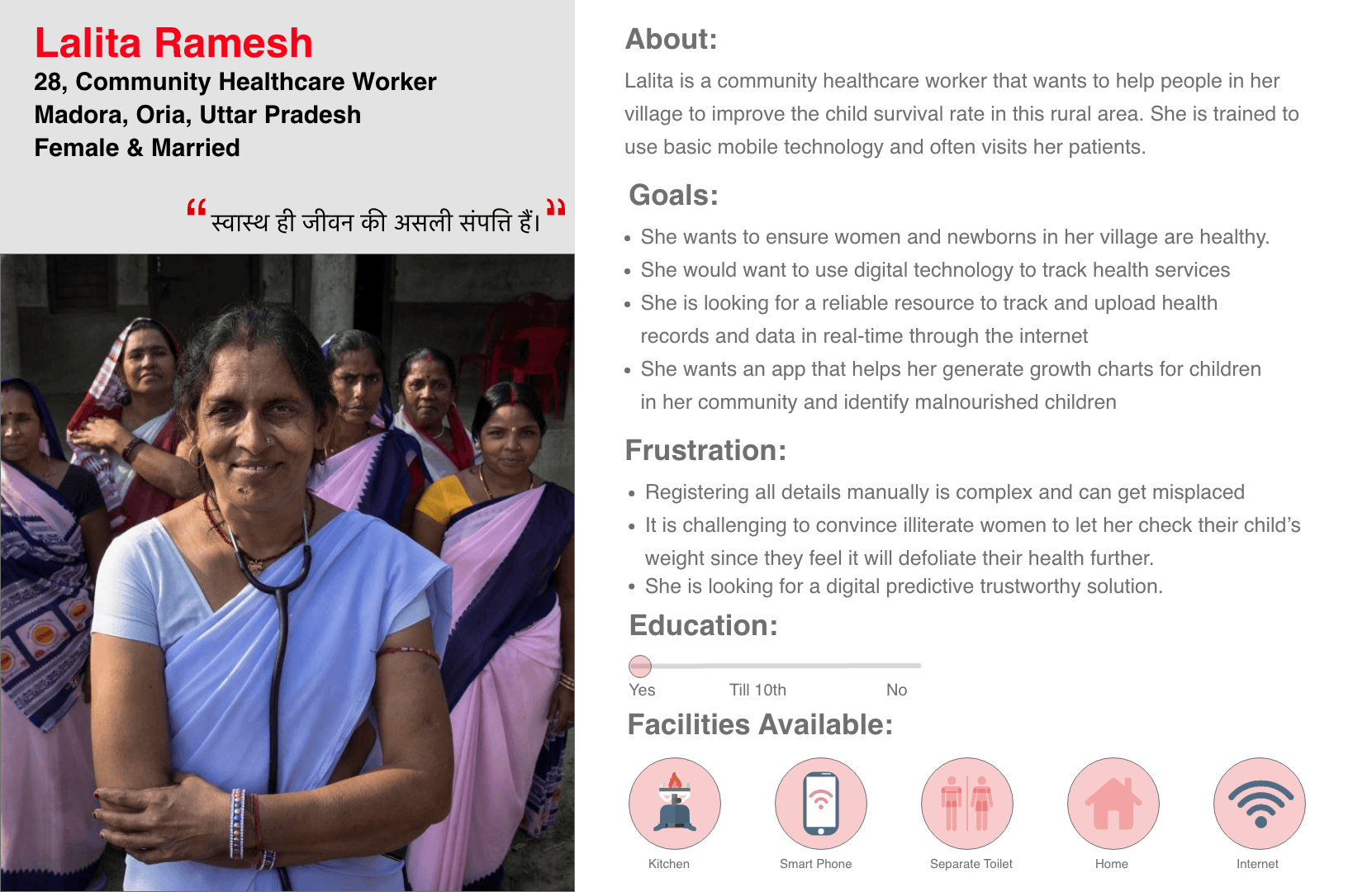
The app was designed for two unique personas

PARENT:

A parent of 2 children who is concerned about the health and well being of her new born baby, and how to take care.

COMMUNITY HEALTH CARE WORKER:
A healthcare worker, who lives far away, and does not have enough resources to help the parent.

PRIMARY RESEARCH

Research Findings

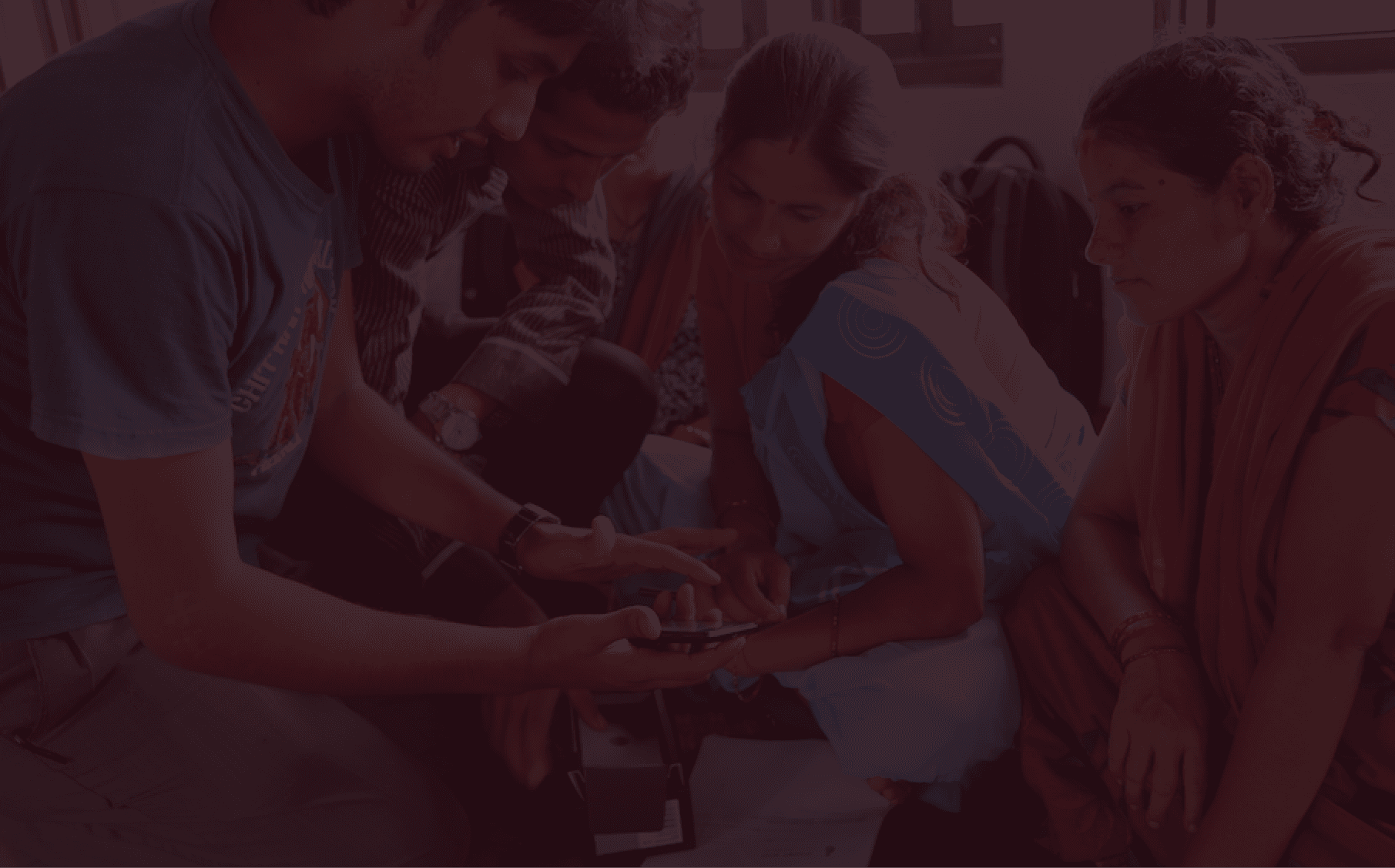
I conducted interviews with 10 employees, followed and observed their daily work and visit to seniors' home, analyzed their work documents and current CMS system.

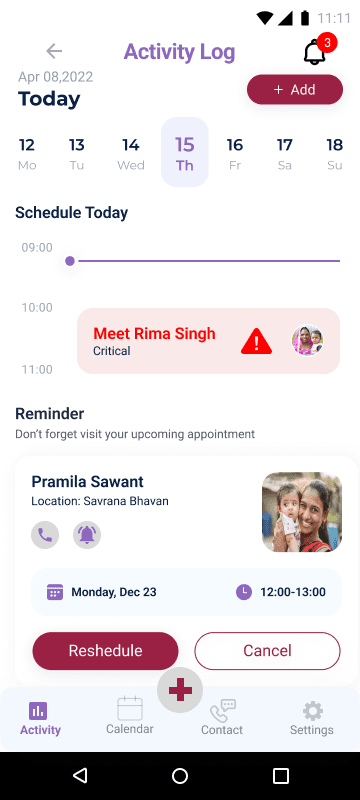
01. Front-line care workers need clear & updated schedule, task know-how, and be able to get urgent support.

Front-line case workers need to visit several seniors to provide different services everyday. The shift and service details always keep changing. They had to check the updated schedule everyday on a paper posted in the NGO center.
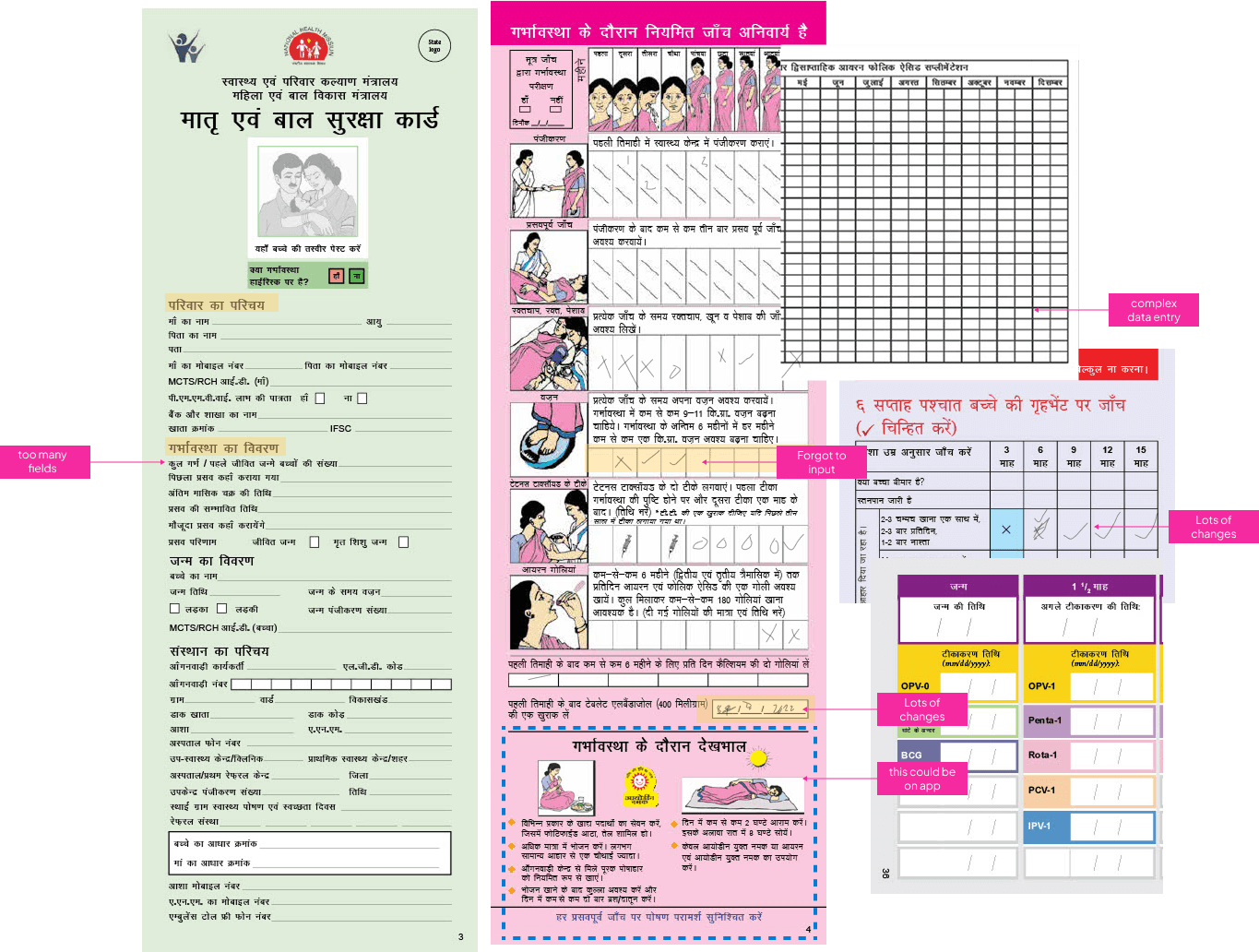
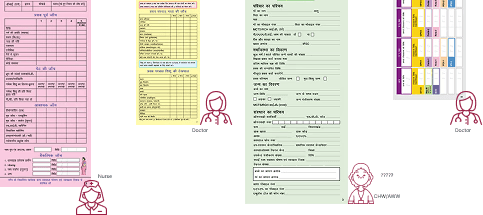
We analyzed the existing data logging processes across various available resources to gain a comprehensive understanding of the current system.

02. The information of each case need to be better archived, centralized and shared among employees.

Professionals and front-line case workers may work for the same service users. However, the information for each service cannot be easily shared among all. They need to specifically ask each other to get the updates when needed.

  1. Building Trust via Data Provenance

Sales leads needed transparency before presenting AI metrics to buyers.
  1. Eliminating Pre-Upload Drop-Off

First-time users weren't sure what Concept Evaluation would do with their images.

CONVERTING RESEARCH TO INFORMED DECISIONS

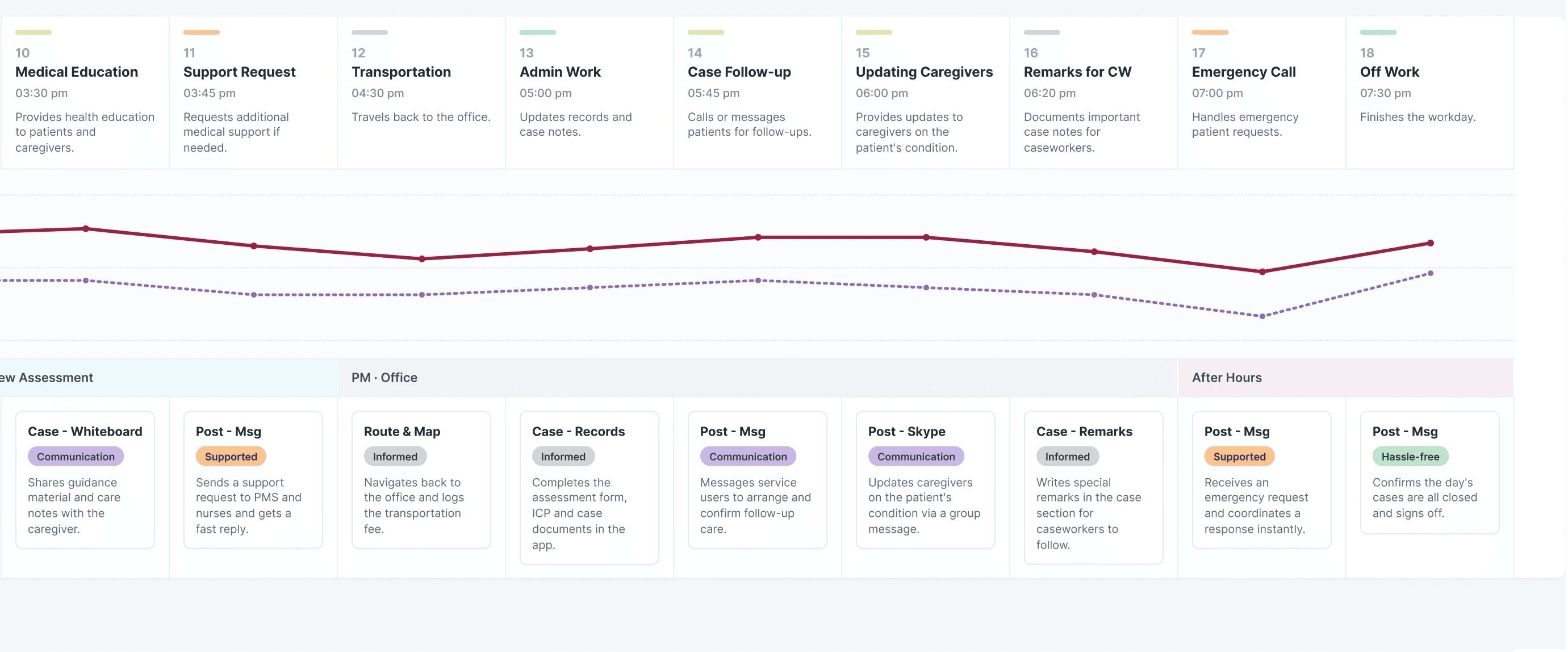
Journey Mapping

We mapped a CHW's typical day through research and field interviews — understanding the rhythm of her work before designing a single screen for it.

CONVERTING RESEARCH TO INFORMED DECISIONS

Making the connections and the ecosystem

To better understand the application and its solutions, I analyzed the different user roles, tasks, and notifications. I created a persona-based task matrix to map out tasks, frequencies, notification providers, and recipients. This helped define roles, responsibilities, and interactions, ensuring a clear and efficient user experience.

DESIGN SYSTEM

Building the Design System & Foundations

Rural India means three constraints most apps skip: low literacy, patchy connectivity, low-end Android.


These had to shape the system, not get bolted on after We locked the icon dictionary and sync component first. Redesigning fifteen screens later costs more than getting the foundation right once.

Garbhasutra

Roboto

Regular/ Medium/Bold

Typography

(गर्भसूत्र)

रोबोटो

Regular/ Medium/Bold

Icons

Illustrations & Button Styles

Colors

The color palette combines bold Indian reds with soft purples, symbolizing motherhood's warmth and healthcare's professionalism.

Logo

"Garbha" means pregnancy, and "Sutra" means guide. The name represents a guiding thread for a healthy pregnancy journey.

The fused mother and child symbolize their bond, representing care, protection during pregnancy.

Patient onboarding

Rural India means three constraints most apps skip: low literacy, patchy connectivity, low-end Android. These had to shape the system, not get bolted on after


We locked the icon dictionary and sync component first. Redesigning fifteen screens later costs more than getting the foundation right once.

1

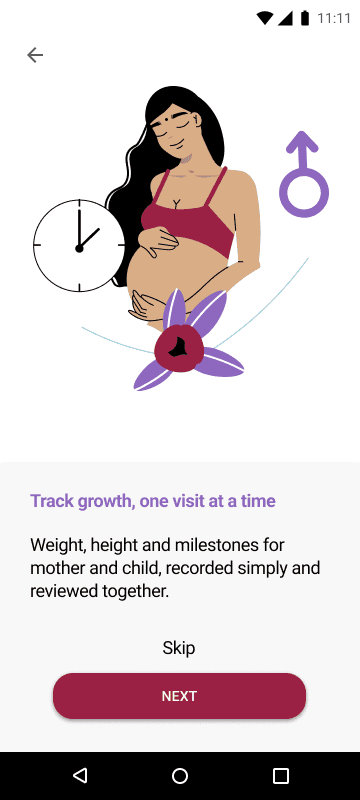
Two users, one app — pick your path from the start

Role selection happens upfront, so every screen after is relevant to you.

2

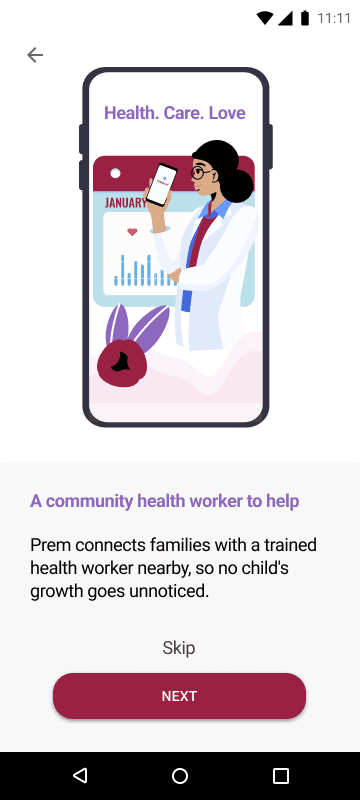
Three things Prem does, plainly

No feature lists. Each screen answers one question a first-time user actually has.

3

Warmth before function

The last thing seen before login is the mission — in language that works across literacy levels.

4

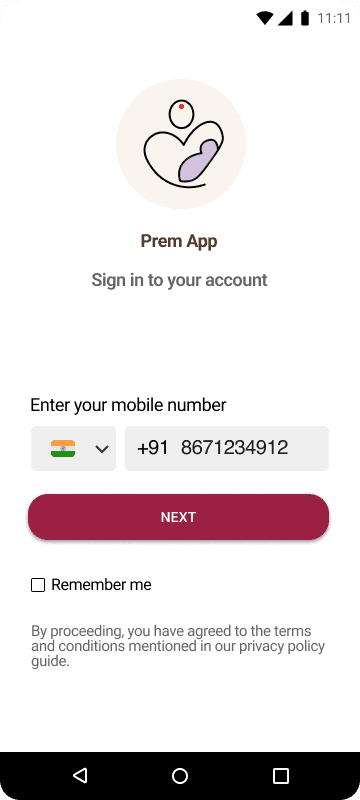
No password, no friction

A phone number and an OTP. Nothing more.

Patient onboarding

Rural India means three constraints most apps skip: low literacy, patchy connectivity, low-end Android. These had to shape the system, not get bolted on after


We locked the icon dictionary and sync component first. Redesigning fifteen screens later costs more than getting the foundation right once.

3

Content matched to the child's stage

Articles and videos surface based on where the child is today, not a generic library.

2

Ai Recomendations

Articles and videos surface based on where the child is today, not a generic library.

1

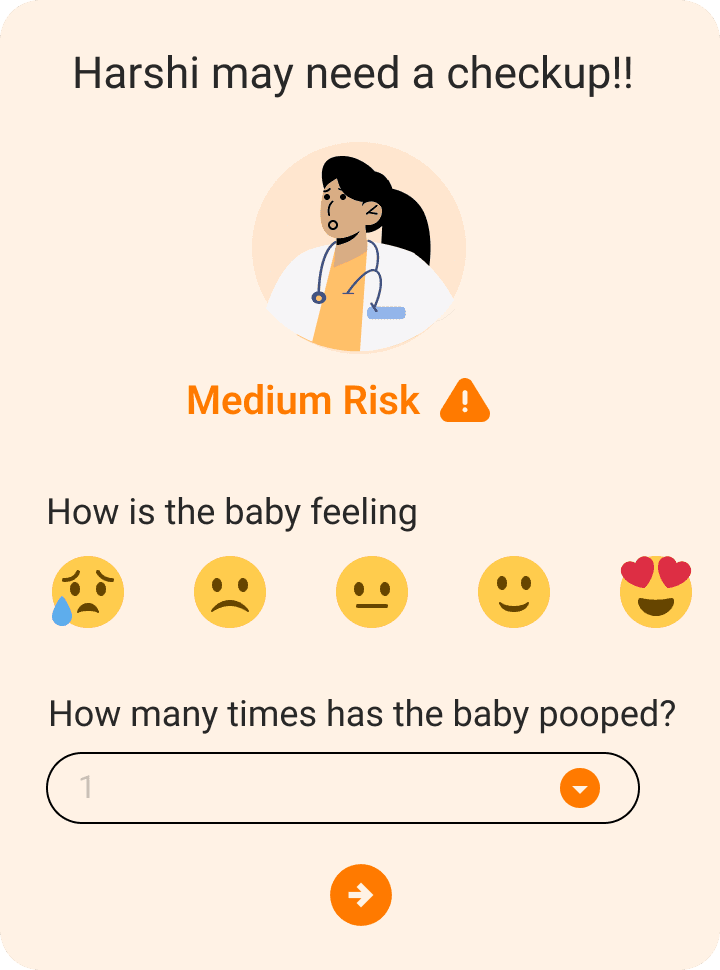
Health status, always visible

Risk level leads the screen — low, medium, or high — with the CHW's name attached to every update.

KEY LEARNINGS & TAKEAWAYS

Building the Design System & Foundations

Although a research proposal, the app was showcased at the 2023 G20 New Delhi Summit by Dr. Apurv Soni — highlighting the future of health-tech in rural India.
The real-world feedback sharpened the project's direction well beyond the MVP.

Constraints are the brief.

Low literacy, patchy connectivity, low-end Android weren't edge cases to design around — they were the actual design problem. The best decisions came from treating infrastructure as a design input, not an obstacle.

Limited Training and support

Even when digital tools are introduced, inadequate training and support can render them ineffective. Workers may struggle with new technologies without proper guidance, leading to underutilization of available resources.

Infrastructure Dependecies

Many Anganwadi centers lack electricity and internet — the basic infrastructure digital health tools depend on.

Misson Statement

A mobile application that empowers professionals & care workers to work more efficiently and collaboratively through:

Parents/Guardian

Healthcare Worker

💊

Emergency Alerts

Notifies users about missed doses and urgent medication schedules, ensuring timely intake.

⚠️

🤰

Patient Health Records

Allows users to consult with pharmacists about medication shortages or potential interactions with other illnesses.

📊

Patient Health Records

Enables patients to track their health data and medication history, helping them.

📹

Medication Information

Community platform where users can ask questions about medications and watch videos for help.

iClick
itravel
iRead
iHike

Beyond Work or
know more About Me! :)

Copyright © 2026 Purti Hardikar. Brewed with Matcha 🍵 Claude Code & Framer, 📍 Sunnyvale, Bay Area, USA.